
Scriptures for Today
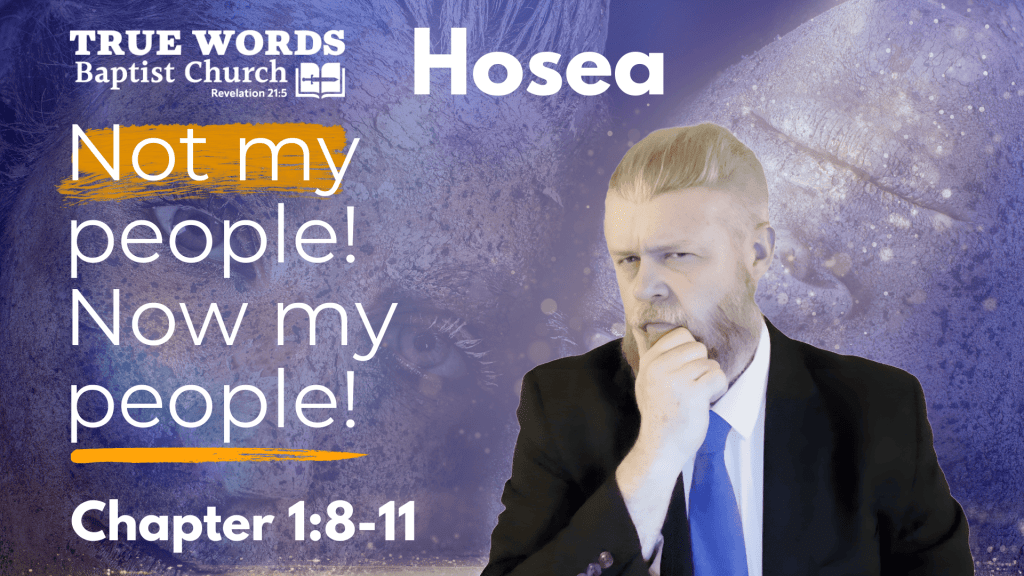
Hosea 1:8-11
Now when she had weaned Lo-ruhamah, she conceived, and bare a son. 9 Then said God, Call his name Lo-ammi: for ye are not my people, and I will not be your God. 10 Yet the number of the children of Israel shall be as the sand of the sea, which cannot be measured nor numbered; and it shall come to pass, that in the place where it was said unto them, Ye are not my people, there it shall be said unto them, Ye are the sons of the living God. 11 Then shall the children of Judah and the children of Israel be gathered together, and appoint themselves one head, and they shall come up out of the land: for great shall be the day of Jezreel.
Introduction — Where Hosea Fits in the Bible
The book of Hosea takes place during a very dark time in Israel’s history.
We are in the period of the divided kingdom. After Solomon died, the nation split into two kingdoms. The northern kingdom was called Israel, and the southern kingdom was called Judah.
The northern kingdom had already gone deep into sin. They had false worship. They had idols. They had corrupt leadership. They had turned away from the Lord again and again.
God sent prophets to warn them. Hosea is one of those prophets.
Hosea is preaching mainly to the northern kingdom of Israel before the Assyrians come and destroy them in 722 BC. Judgment is coming. The nation is about to collapse. But the message of Hosea is very different because God does something no other prophet experiences.
God uses Hosea’s own family as a living illustration of what Israel had done to Him. God tells Hosea to marry a woman named Gomer. She becomes unfaithful to him. That unfaithfulness becomes a picture of Israel’s spiritual adultery.
Israel had left the Lord. They worshipped idols. They followed false gods. They trusted other nations instead of trusting God. And through Hosea’s marriage to this unfaithful woman, God shows Israel what their unfaithfulness looks like.
What Happens in Hosea 1:1–7
In the first seven verses of this chapter, Hosea begins his ministry. Verse 1 tells us Hosea prophesied during the reigns of several kings of Judah and during the reign of Jeroboam the son of Joash, king of Israel. This places Hosea near the end of the northern kingdom before its destruction. Then God tells Hosea to take a wife of whoredoms. This is not because God approves of sin. It is because God is creating a living picture of Israel’s unfaithfulness.
Hosea marries Gomer, and they begin to have children. Each child receives a name that carries a message from God. The first child is named Jezreel. That name points to judgment that will come upon the house of Israel. The second child is a daughter named Lo-ruhamah, which means no mercy. God is warning that the northern kingdom will soon face judgment without mercy.
But in verse 7 God also gives a promise to Judah. He says He will still have mercy on the southern kingdom for a time. So in the first part of the chapter we see warning after warning. Judgment is coming. Israel’s sin has consequences.
Where Our Passage Begins
Now we come to verse 8. Another child is born. And this child receives another name that carries another message from God. But something very important happens in this section.
God first announces rejection. But then suddenly, right in the middle of the warning, God announces future restoration. And that is what we are about to see in Hosea 1:8–11. God declares judgment. But God also reveals His plan for redemption.
Another Child Is Born
Hosea 1:8
Now when she had weaned Lo-ruhamah, she conceived, and bare a son.
Now remember, earlier in this chapter Hosea had a daughter named Lo-ruhamah. That name meant no mercy. So now another child is born. And just like the other children, the name of this child is going to carry a message from God.
God is literally turning Hosea’s family into a living prophecy. Imagine growing up and your name itself is a sermon. That’s what is happening here.
First child was a son named Jezreel. Second child was a daughter named Lo-ruhamah. Let’s see the name of the third child, a son. We find this in the very next verse.
A Name That Meant Rejection
Hosea 1:9
Then said God, Call his name Lo-ammi: for ye are not my people, and I will not be your God.
The name Lo-ammi means not my people. Think about how serious that statement is. All throughout the Old Testament God calls Israel His people. But now He says something shocking. That’s why this book is amazing, and it is eye opening. This book, the book of Hosea, should be easy to remember.
“Ye are not my people.” Why? Because Israel had rejected Him. They turned to idols. They turned to false gods. They turned away from the Lord. And when people reject God long enough, judgment comes.
God is showing them that their rebellion has broken that relationship. This is how serious sin is. Sin separates people from God. God is the Creator of all things. When we reject Him in any way, this is a very serious sin. And there will be judgment because He is God.
From “Not My People” to “Sons of the Living God”
Hosea 1:10
Yet the number of the children of Israel shall be as the sand of the sea, which cannot be measured nor numbered; and it shall come to pass, that in the place where it was said unto them, Ye are not my people, there it shall be said unto them, Ye are the sons of the living God.
This is one of the most important verses in this chapter, and really one of the most important statements in the entire book of Hosea. Just one verse earlier God said something extremely serious.
He said, “Ye are not my people.” That’s what the name Lo-ammi means. Not my people. That’s judgment. That’s rejection. That’s God saying that Israel had gone so far into sin that they were no longer acting like His people at all.
But then verse 10 begins with a very important word. “Yet.” That word changes the direction of everything. Even though judgment is coming… Even though Israel has sinned… Even though God has just said “Ye are not my people”… God now gives a promise.
He says “the number of the children of Israel shall be as the sand of the sea.” Those words should immediately remind you of something in the Bible. God said the exact same thing to Abraham. God promised Abraham that his descendants would be like the stars of heaven and like the sand of the sea. In other words, they would be countless.
But here’s something very important to understand. That promise was never simply about physical descendants. Yes, Abraham had physical descendants. But the Bible makes it clear over and over again that not every physical descendant of Abraham truly belonged to God. There were many Israelites who were born into the nation but did not believe the Lord.
So when Hosea says the children of Israel will be like the sand of the sea, he is pointing to something much bigger than just a physical nation. He’s pointing to a people that belong to God. A people who are called His. Then the verse continues.
It says “in the place where it was said unto them, Ye are not my people.” That’s what God just said in the previous verse. Not my people. But then something changes. It says “there it shall be said unto them, Ye are the sons of the living God.”
People who were called not my people are now called sons of the living God. And the New Testament actually explains this verse for us very clearly. Paul quotes this exact passage in the book of Romans.
Romans 9:25–26
As he saith also in Osee, I will call them my people, which were not my people; and her beloved, which was not beloved. And it shall come to pass, that in the place where it was said unto them, Ye are not my people; there shall they be called the children of the living God.
Paul shows us that God’s plan was always bigger than just one physical nation. God was calling a people to Himself. A people who belong to Him. A people who would be called the children of the living God.
So Hosea 1:10 shows us something amazing. The people who were once called not my people will one day be called sons of the living God. Judgment is not the final word. God’s plan is redemption. God is building a people for Himself. And those people are called the sons of the living God.
The sons of the living God were once not His people. And then they changed their mind and believed on the Lord Jesus Christ and became His people.
The Gathering Under One Head
Hosea 1:11
Then shall the children of Judah and the children of Israel be gathered together, and appoint themselves one head, and they shall come up out of the land: for great shall be the day of Jezreel.
This verse continues the promise that began in verse 10. God has just said that people who were once called “not my people” will be called “sons of the living God.” Now He explains what He means.
The verse begins by saying “Then shall the children of Judah and the children of Israel be gathered together.”
When Hosea was preaching, the nation was divided. The northern kingdom was called Israel, and the southern kingdom was called Judah. They were two separate kingdoms with different kings and different leadership. But here God promises a future gathering. The divided people will be brought together again. The separation will not last forever. God will unite His people.
This ultimately points to the people of God being gathered into one nation — not a divided political kingdom, but a people that belong to Him.
The verse then says “and appoint themselves one head.” Instead of two kingdoms and many rulers, there will be one head. One leader. One ruler over the people of God. The Bible consistently points to that one head being the Messiah, the Lord Jesus Christ. He is the one true King over the people of God.
Then the verse says “and they shall come up out of the land.” That language reminds us of the Exodus, when Israel came up out of Egypt after their deliverance. Throughout the Bible, the phrase “come up out of the land” often points to God bringing His people out of trouble and restoring them. It shows deliverance. It shows restoration. It shows God bringing His people out of judgment and into His blessing.
Finally the verse ends with this statement: “for great shall be the day of Jezreel.”
Earlier in this chapter the name Jezreel was connected with judgment. It pointed to bloodshed and punishment that would come upon Israel. But the word Jezreel literally means “God will sow.” So the name that once pointed to judgment now points to restoration. God will plant His people again. God will restore what had been broken.
What once symbolized destruction now becomes a picture of renewal. Just like you and I in our life. Before we believed to after we believed. So this verse shows the final result of God’s plan. The divided people will be gathered. They will have one head. They will be brought out of trouble. And God will restore His people again. For great shall be the day of Jezreel.
Practical Lessons
- Sin Brings Consequences. Israel’s rebellion led to judgment. God is patient, but He does not ignore sin forever.
- God Keeps His Promises. Even when Israel failed, God did not forget His promises. God always keeps His word.
- God’s Mercy Is Greater Than Our Failure. Even after saying “Ye are not my people,” God promised restoration. That shows how great God’s mercy really is.
Conclusion
This passage shows an incredible contrast. First God says: “Ye are not my people.” But later He says: “Ye are the sons of the living God.” That’s the power of God’s mercy. God judges sin. But God also restores. And when God makes a promise, that promise will come to pass.
Let’s pray.
Leave a Reply